Explosive Atmospheres Directive
ATEX Certification for Equipment in Explosive Atmospheres
(2014/34/EU)
ATEX certification for equipment intended for use in potentially explosive atmospheres, assessed under EU Directive 2014/34/EU
Standard Overview
ATEX Certification
Explosive Atmospheres
We provide comprehensive ATEX certification services for equipment and protective systems intended for use in potentially explosive atmospheres.
What is ATEX?
ATEX (Atmosphères Explosibles) certification is required under Directive 2014/34/EU for equipment and protective systems intended for use in potentially explosive atmospheres. It covers equipment used in mining, chemical, petrochemical, and other industries where explosive gas, dust, or vapor may be present.
Comprehensive Services
Service Nodes
Equipment Certification
Full scope ATEX certification for equipment in explosive atmospheres.
Risk Assessment
Comprehensive explosive atmosphere risk assessment and zone classification.
Training & Consultancy
Expert guidance on ATEX requirements and safety documentation.
Ongoing Support
Continuous monitoring for ATEX regulation updates and equipment changes.
Documentation & Reporting
Technical documentation and ATEX compliance certification records.
Remediation Support
Addressing non-conformities in equipment for explosive atmospheres.
Key Advantages
Benefits Protocol
Regulatory Compliance
Meet all ATEX directive requirements for explosive atmosphere equipment.
Market Access
Access to European markets for equipment used in hazardous areas.
Safety Assurance
Demonstrate commitment to explosion protection standards.
Competitive Advantage
Stand out as an ATEX-certified equipment manufacturer.
Risk Management
Reduce risks associated with explosive atmosphere operations.
Why Eurocert Asia?
Our experienced auditors understand ATEX requirements and can guide you through the certification process.
Explore More
Related Protocols
Initiate ATEX Compliance
Quick Inquiry
Our explosive atmosphere experts are ready to guide your organization through ATEX compliance and certification.
The Law
ATEX Directive 2014/34/EU
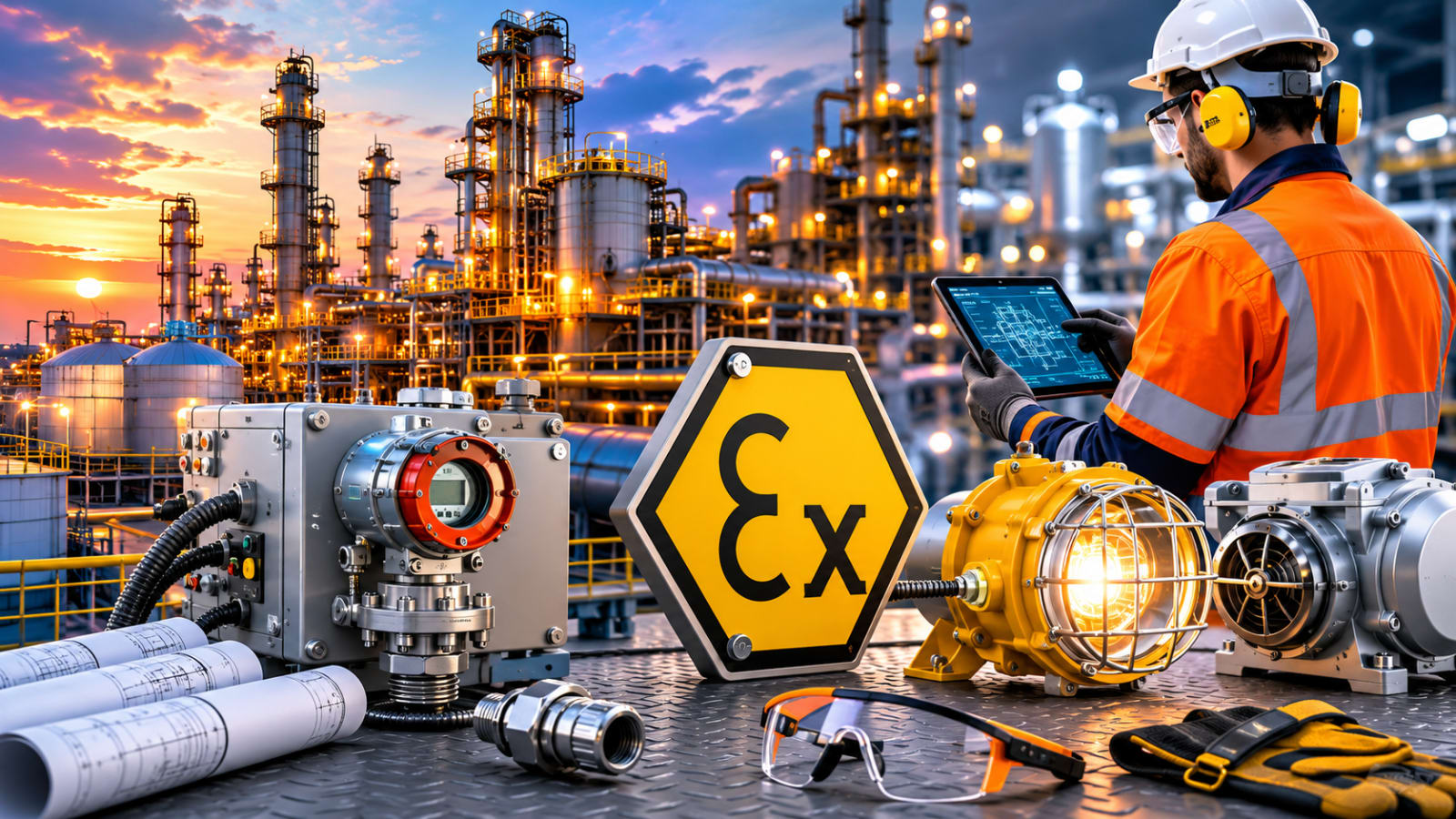
The ATEX directive 2014/34/EU sets the essential health and safety requirements for equipment and protective systems intended for use in potentially explosive atmospheres. It has applied since 20 April 2016, replacing the earlier directive 94/9/EC. Equipment that complies is CE marked and carries the Ex marking, which is required to place it lawfully on the EU market.
Hazard Levels
Equipment Categories and Zones
ATEX equipment is divided into three categories by the level of protection, matching the probability of an explosive atmosphere.
- Category 1 - very high protection, for Zone 0 (gas) and Zone 20 (dust) where explosive atmospheres are present continuously
- Category 2 - high protection, for Zone 1 and Zone 21 where explosive atmospheres are likely in normal operation
- Category 3 - normal protection, for Zone 2 and Zone 22 where explosive atmospheres are unlikely and only short-lived
Choosing the wrong category is the most common compliance failure. Part of our conformity assessment is confirming the intended zone of use so the classification and marking match the application.
How It Works
Notified Body & Conformity Assessment
For Category 1 and most Category 2 products, a notified body must be involved in the conformity assessment. Eurocert manages the complete assessment on your behalf - preparation of the technical file, testing coordination, EU-type examination procedures and the notified body dossier - so the route ends cleanly with a CE declaration of conformity (DoC), the EU-type examination certificate, the Ex nameplate and the notified body identification number.
The technical file you keep must include the design and drawings, the test evidence, the risk assessment for ignition sources, and the quality documentation. Explosion-protection testing covers ignition source assessment, temperature classification, enclosure integrity and similar specific checks.
Planning
Cost, Timeline & ATEX vs IECEx
ATEX certification cost depends on the product type, protection concept, test scope and category. Typical projects range from a few thousand euros for Category 3 self-certification support to substantially more for Category 1 projects involving full EU-type examination and testing. Lead time is commonly four to twelve weeks once the technical file is complete.
ATEX is the EU legal regime. IECEx is the international voluntary certification scheme for explosive atmospheres equipment recognised in many markets, including Australia, the Middle East, Russia and parts of Asia. Manufacturer who export to both the EU and other markets often hold ATEX and IECEx certification in parallel because the underlying product and test requirements are closely aligned.
Related Directives
ATEX and the Wider CE Picture
Ex equipment almost always needs more than ATEX. Motors and drives may also fall under the machinery directive, and electrical enclosures under LVD and EMC requirements, while pumps and vessels may be in scope of the pressure equipment directive. Eurocert coordinates the full CE marking stack for the same product, so you avoid duplicate testing and missed modules: machinery, LVD / EMC, PED, TPED (pi mark), RoHS, REACH, and lifts.