C-TPAT - Customs-Trade Partnership Against Terrorism
Strengthen your supply chain security, reduce inspections, and improve border clearance with the CBP partnership program
Program Overview
What is C-TPAT?
U.S. Customs and Border Protection (CBP) listened to the recommendations made by the Advisory Committee on Commercial Operations (COAC), which encouraged the creation of the C-TPAT Exporter Entity. CBP introduced an exporter entity to C-TPAT to support export growth and increase the competitiveness of the U.S. business community, as outlined by President Obama's National Export Initiative.
CBP is also interested in providing the U.S. business community with benefits currently enjoyed by foreign importers through Mutual Recognition Arrangements (MRA). This is an opportunity to align with the programs of foreign customs under the World Customs Organization's (WCO) Framework of Standards to Secure and Facilitate Global Trade (SAFE Framework).
How C-TPAT Works
When an entity joins C-TPAT, an agreement is made to work with CBP to protect the supply chain, identify security gaps, and implement specific security measures and best practices. Applicants must address a broad range of security topics and present security profiles that list action plans to align security throughout the supply chain. C-TPAT members are considered to be of low risk, and are therefore less likely to be examined at a U.S. port of entry.
Risk Assessment
The Five Step Risk Assessment Process
Map Cargo/Data Flow
Map cargo/data flow and control, identify business partners (directly or indirectly contracted) and how cargo moves throughout the supply chain including modes of transportation (air, sea, rail, or truck) and nodes (country of origin, transit points).
Conduct Threat Assessment
Focus on Terrorism, Contraband Smuggling, Human Smuggling, Agricultural and Public Safety Threats, Organized Crime, and conditions in a country/region which may foster such threats, and rank those threats.
Conduct Vulnerability Assessment
In accordance with C-TPAT Minimum Security Criteria - identify what the Partner has that a terrorist or criminal might desire (data, access to cargo, company information), then identify weaknesses in procedures that would allow access.
Prepare Written Action Plan
Address vulnerabilities with mechanisms to record identified weaknesses, who is responsible for addressing the issues, and due dates. Report results to appropriate company officials and employees on completed follow up and changes.
Document the Procedure
Document how risk assessments are conducted, including reviewing and revising the procedure periodically. The process should be reviewed and updated at least annually, and a Risk Assessment should be conducted and documented at least annually.
Understanding Validation
C-TPAT Validation FAQs
What is a C-TPAT Validation?
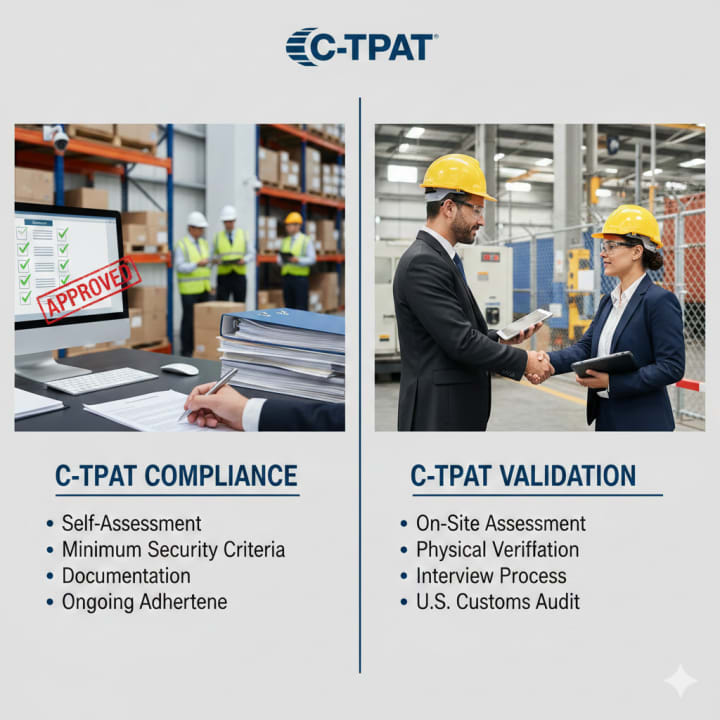
A C-TPAT validation is a process through which the U.S. Customs and Border Protection (CBP) C-TPAT program meets with company representatives and visits selected domestic and foreign sites to verify supply chain security measures contained in the C-TPAT participant's security profile are accurate and are being followed.
What is the Goal of a C-TPAT Validation?
The principal goal for CBP is to ensure that the company's C-TPAT security profile is reliable, accurate, and effective. However, validations also provide a forum through which CBP and a C-TPAT participant can build a stronger partnership by discussing supply chain security issues, sharing "best practices," and cooperatively developing solutions to address potential vulnerabilities. The face-to-face nature encourages both CBP and the C-TPAT participant to better understand the role each plays in securing borders against international terrorism.
Is a C-TPAT Validation an Audit?
No. A validation is not an audit. Whereas CBP routinely performs audits in a variety of operational and regulatory areas (e.g. trade compliance, NAFTA), C-TPAT validations do not measure a company's adherence to existing government rules and regulations. Instead, the validation is focused on the verification of supply chain security processes and procedures that a company voluntarily agrees to verify or perform under the auspices of the C-TPAT program.
Updated Requirements
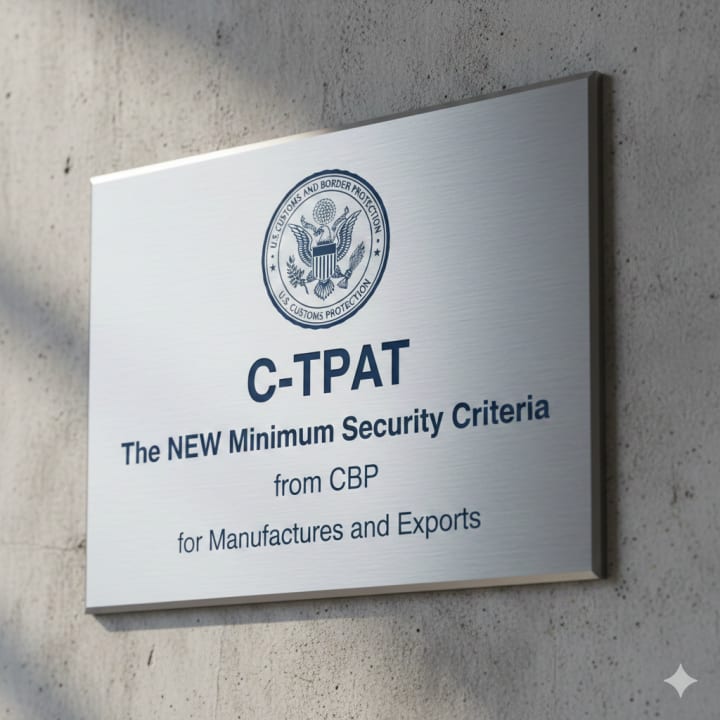
C-TPAT New Criteria
Management Commitment to a Culture of Security
Cyber Security and Protection from Social Engineering Threats
Agricultural Security
Prevention of Money Laundering and Terrorism Financing
Membership Benefits
Benefits of C-TPAT Membership
C-TPAT Validation
Achieve validated status through U.S. Customs & Border Protection partnership.
Supply Chain Security Assessment
Comprehensive assessment of your supply chain security practices and vulnerabilities.
Security Best Practices
Implement robust security controls and best practices across your supply chain.
Faster Customs Clearance
Reduce delays and expedite customs processing at the border.
Reduced Inspections
C-TPAT members are considered low risk and less likely to be examined at U.S. ports of entry.
Priority CBP Processing
Receive priority processing for your shipments through CBP.
Front-of-Line Status
Front-of-line status at U.S. border crossings for faster movement of goods.
Enhanced Trade Partnership
Strengthen your partnership with U.S. Customs & Border Protection.
Trusted Audit Partner
Why Get Audited by Eurocert?
About Eurocert
Eurocert Asia is affiliated with Eurocert SA, Athens, Greece, which is a leading global independent third-party inspection, audit and certification body. Through this affiliation, clients benefit from internationally recognised accreditation, a worldwide footprint, and highly trained auditors with deep expertise in supply chain security, CTPAT-style readiness and trade-facilitation risk controls.
C-TPAT Expertise
Eurocert Inspection Services provides methods, audits, and reviews to better manage and improve shipment-related data, and can help businesses achieve C-TPAT status. With a potential for fines, maintaining compliance is important.
We perform supply chain security audits against all Customs-Trade Partnership Against Terrorism (C-TPAT) global and regional requirements, including the updated Minimum Security Requirements.
We are offering above services on behalf of Eurocert S.A - a Pan-European Certification body operating from Athens with global reach.

CTPAT Audits - ISO 28000 Exchange Platform
Access our secure exchange platform to manage C-TPAT audit reports, share ISO 28000 compliance data, and connect buyers with certified manufacturers.
For Buyers
Access audit reports, manage supply chain compliance, and connect with certified manufacturers.
For Manufacturers
Showcase your C-TPAT compliance, share ISO 28000 results, and connect with global buyers.
Secure & Trusted
Enterprise-grade security for all your supply chain compliance data and audit reports.
Explore More
Related Certifications
Get Compliant
Start Your C-TPAT Journey
Our supply chain security experts are ready to guide your organization through C-TPAT validation and compliance with all global and regional requirements.