SA8000 Social Accountability Certification
A respected social accountability certification for manufacturers, factories and farms, based on SA8000:2014 - widely considered the gold standard for social accountability worldwide
Standard Overview
What is SA 8000 Certificate?
SA 8000 certificate is a respected social accountability certification for producers, factories and farms. This is based on SA 8000:2014 standard. This standard has 9 clauses. Out of the 9 clauses, 8 are related to Labour welfare and the 9th clause is related to management system. Because of the management system orientation, this standard is more difficult to adopt, which is why it is more demanding in terms of efforts required to maintain certification.
One of the other reasons it is more respected is that it asks for the Basic Needs Wage implementation. This is a significant demand from the producers and suppliers as this increases their wage bill. This is the reason it is considered the gold standard for Social Accountability.
SA 8000 standard concerns all companies regardless of activity that aim at continuously improving labour conditions and communicate this to all relevant stakeholders and interested parties, by addressing labour issues also to sub-contractors.
History of SA 8000:2014
Rising public concern about inhumane working conditions in developing countries led to the creation in 1997 of the Social Accountability International Organization. Its purpose was to draw up a universal code of practice for labour conditions in manufacturing and agricultural industry. SA 8000 prescribes specific performance standards and is designed to embrace existing international agreements including ILO convention, the Universal Declaration on Human Rights, and the UN Convention on the Rights of the Child.
SA 8000 Values
Nine Essential Performance Areas
SA 8000 provides transparent, measurable, verifiable elements for certifying the performance of companies in nine essential areas
Child Labor
Forced Labor
Health and Safety
Freedom of Association & Collective Bargaining
Discrimination
Disciplinary Practices
Working Hours
Remuneration
Management System
Certification Benefits
Benefits of SA 8000 Certification
Many businesses have already begun to recognize the commercial advantages of adopting an ethical dimension in their employment practices. The SA 8000 standard offers a global social responsibility employment practice, which complies with UN and Human Rights Conventions and Declarations.
Global Buyer Compliance
Meet ethical sourcing expectations of international buyers and retailers with the gold standard of social accountability.
Stakeholder Trust
Demonstrate commitment to responsible business practices to investors, partners, and the public.
Fair & Ethical Workplace
Establish systems ensuring dignity, fairness, and a needs-based wage for all workers.
Worker Safety & Welfare
Enhance health, safety, and working conditions across your operations.
Brand Reputation
Strengthen your brand as a globally recognized ethical and responsible organization.
Global Market Access
Open doors to markets requiring verified social accountability and ethical labor practices.
Supply Chain Risk Reduction
Identify and mitigate social compliance risks throughout your supply chain.
Attract Ethical Investors
Appeal to ESG-focused investors and brands seeking responsible investment opportunities.
Certification Roadmap
How to Get SA 8000 Certificate?
While the roadmap for obtaining this social certification may vary for each factory, here is a generic roadmap for new factories
Get the Management Commitment
While this seems to be a very easy step, this is actually the most difficult. The most common mistake is that the top management is only given the idea of certification audit cost. Not knowing all the cost aspects of SA 8000 certificate is a big mistake - they get financial shocks when they find that the cost of maintaining this certificate is actually much more than the cost of acquiring it.
Knowing the cost is not enough. The top management should align with the principals of SA 8000 standard. This will require development of compassion for the workers. All the members of top management first have to commit to the welfare of the workers as a broad principal. This commitment is the foundation stone to all social certifications. Once this is done, rest is a piece of cake.
Build Policies, Procedures & a Team
This step can take anywhere between 30 days to 90 days depending on efforts and competence of the team. A team is very important - this team is known as the Social Performance Team (SPT) by SA 8000 standard. An SPT should have worker as well as members from management, and the worker member may include worker representative.
The SPT should be well trained in Risk Analysis, SA 8000 standard, and Root Cause Analysis. This training should not be one time but repeated and improved. The Social Performance Team should also be involved in conducting Internal audit and in the conduct of management reviews.
Apply to the Certification Body
If the above two steps are conducted comprehensively, then this step is very easy. The certification body does two audits - Stage 1 and Stage 2. Each audit will result in certain observations and non-conformities. The Social Performance Team should carefully study all observations and non-conformities and conduct root cause analysis for each, trying to take corrective action that will prevent recurrence.
How Long Does It Take?
The certification process involves two stages and stakeholder consultation, taking around 30 days to complete. However, one should not say it takes only 30 days - it generally takes 6 months of active management system implementation.
SA 8000 auditors expect at least 6 months record of an effective management system where policies and procedures are understood and executed at least partially. It may take 30 days to 9 months to get a certificate depending on the company's existing social management system.
Root Cause & Corrective Action
Step 1 - Root Cause Analysis: Use a Fish Bone analysis technique to help the SPT think in specific areas. The team should meet 2-3 times with a break of 2-3 days in between, identifying root causes for each non-conformity in possible directions drawn as "branches" of the fish-bone structure.
Step 2 - Corrective Action: Once root causes are identified, the SPT tries to identify more than one ACTION for each non-conformity. This step requires understanding of all processes and their linkages, and is the most difficult step in the improvement cycle.
Superior Standard
Why SA 8000 is Superior
The Gold Standard
- It advocates paying workers a "needs wage" rather than "minimum wage" - a needs wage is higher than the minimum wage
- SA 8000 standard demands a management system approach
- It asks for a dedicated team (SPT) to make and improve social management system
- SA 8000 implementation demands commitment from top management
- Stringent monitoring by a dedicated team of professionals and reduced number of authorized certification bodies ensures higher implementation standards
SA 8000 vs ISO 26000
ISO 26000:2010 is a guidance standard, not a requirement standard. SA 8000 is a requirement standard with specific performance criteria and certification requirements.
The main difference is not in the content but in the execution and monitoring of the certification scheme. The execution and monitoring of SA 8000 is much higher than an ISO-based standard.
SA 8000 is the most trustworthy international standard for social responsibility. ISO 26000 is a guidance document - application of ISO 26000 is a step forward before implementing and certifying with SA 8000. Eurocert S.A, having great experience in the field, may conduct conformity audits according to ISO 26000 and issue relevant declarations.
Clause 9 - Management System
Management System Elements
SA 8000:2014 has a major clause about management systems with 10 subclauses, making it the biggest requirement clause of the standard
Policies, Procedures & Records
Avoid redundancy, ensure regular review, and keep documentation practical and deliverable.
Social Performance Team
A team with worker and management members to drive social system improvements.
Risk Assessment
Comprehensive risk assessment covering all SA 8000 elements.
Monitoring
Ongoing monitoring of social performance indicators and compliance.
Internal Involvement & Communication
Active communication and engagement across all levels of the organization.
Complaint Management & Resolution
Effective systems for raising, investigating, and resolving worker complaints.
Stakeholder Engagement
Meaningful engagement with external and internal stakeholders.
Corrective & Preventive Actions
Structured processes for addressing non-conformities and preventing recurrence.
Training & Capacity Building
Continuous training for SPT, workers, and management on social accountability.
Management of Subcontractors
Extending SA 8000 compliance requirements throughout the supply chain.
Trusted Certification Partner
Why Certify with Eurocert S.A?
About Eurocert
Eurocert Asia is affiliated with Eurocert SA, Athens, Greece, which is a leading global independent third-party inspection, audit and certification body. Through this affiliation, clients benefit from internationally recognised accreditation, a worldwide footprint, and highly trained auditors with deep expertise in social accountability, labour standards and SA 8000"aligned conformity assessment.
SAAS Accredited
Eurocert S.A is one of the few elite accredited certification bodies for the SA 8000 standard worldwide, accredited by the Social Accountability Accreditation Services (SAAS).
Certification by Eurocert means evaluation and acceptance by an accredited and well-respected third-party professional organization with global recognition.
We are offering above services on behalf of Eurocert S.A - a Pan-European Certification body operating from Athens with global reach.
Explore More
Related Certifications
Get Certified
Start Your SA 8000 Journey
Our SAAS-accredited social accountability experts are ready to guide your organization through SA 8000 certification - the gold standard for social accountability.
The Standard
What Does SA8000 Mean?
SA8000 is the leading global social accountability certification standard, issued by Social Accountability International (SAI). SA stands for Social Accountability, and the 8000 family number follows the ISO catalogue convention. The current version is SA8000:2014. It is the only auditable global standard dedicated to decent working conditions, and unlike a one-off SMETA report it leads to a formal certificate backed by a third-party certification system.
The Requirements
The 9 SA8000 Requirement Clauses
- Child labour - prohibition and remediation
- Forced or compulsory labour - prohibition
- Health and safety - safe working environment
- Freedom of association and the right to collective bargaining
- Discrimination - prohibition in hiring and employment
- Disciplinary practices - no corporal punishment or abuse
- Working hours - 48-hour normal week with rest days
- Remuneration - living wage and fair pay
- Management system - policies, records, training and continuous improvement
Process
SA8000 Certification Process
SA8000 certification is delivered under the SAAS accreditation system, which governs which bodies may issue the certificate. The journey is: application and scope definition, document review, an on-site certification audit including worker interviews, resolution of non-conformances, certification committee approval and issue of the three-year certificate with annual surveillance audits. At the end of each year your buyer can verify the certificate on the SAAS public list.
Typical documents include payroll and working-hour records, HR policies, health and safety records, worker representation records and training evidence. The audit normally takes two to four audit days depending on facility size. For an average single factory in India, clients typically plan three to five months from application to certificate, and cost scales with headcount and site complexity - our team gives you a fixed fee after a free scoping call.
Compare
SA8000 vs SMETA and Related Schemes
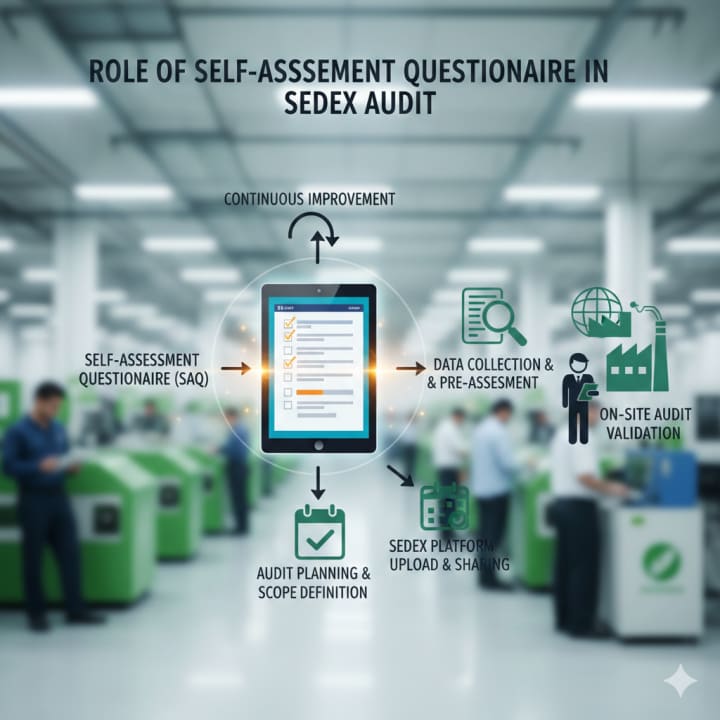
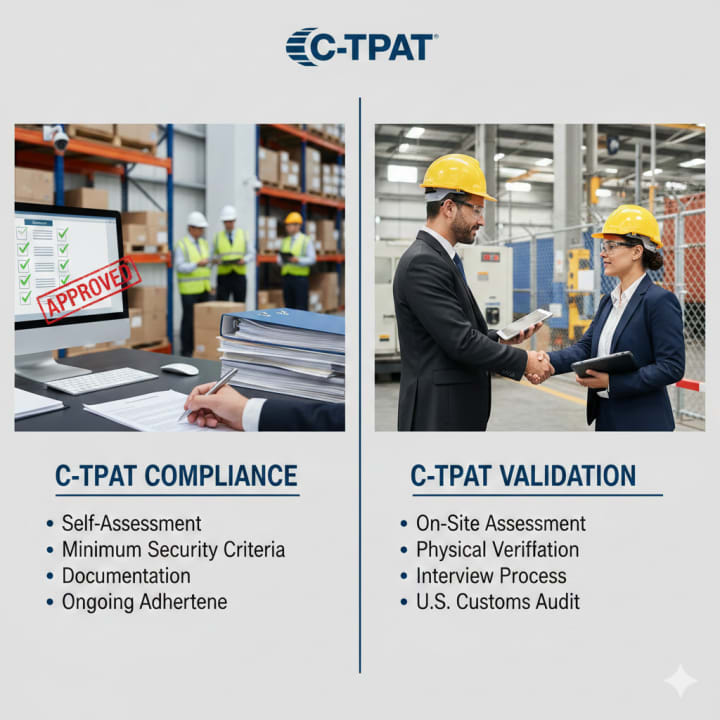
SMETA is an audit report shared on the Sedex platform; SA8000 is a formal, verifiable certification against a single international standard. Many exporters running both programmes report that a strong SA8000 system makes SMETA audits fast and easy. Buyers may also ask for SMETA / Sedex, code of conduct audits, SLCP, WRAP, C-TPAT or RMI requirements. We scope these together so one on-site visit covers as much as possible.