Welder Qualifications
Testing Procedure
Comprehensive welder qualification testing and certification to ensure welders have the required skills and knowledge for safe, effective welding projects.
Fundamentals
What is Welding?
Welding is a process of joining two pieces of material together by heating them until they melt and then cooling them so that they form a strong bond. There are many types of welding, and the most common is arc welding.
How Arc Welding Works
Arc welding uses an electric current to create an arc between two pieces of metal. The heat from the arc melts the metal and creates a pool of molten metal called a weld pool. As the weld pool cools down, it forms a strong joint between the two pieces of metal.
Welding is distinguished from other joining processes, such as brazing and soldering, which do not melt the base metal. Numerous welding processes are available, including arc welding, gas welding, and resistance welding - each with its own advantages, strength, appearance, and cost characteristics.
Welding Processes
Types of Welding

Arc Welding
Uses an electric arc to create heat for melting metal. Produces clean welds with minimal slag buildup - commonly used where aesthetics are important. Can be difficult to achieve consistent results and is not recommended for large projects requiring high precision.

Gas Welding
Uses oxygen and fuel gas (usually acetylene) to create heat for melting metal. Commonly used where speed is more important than aesthetics. Can be dangerous if not done properly due to the risk of explosion.

Resistance Welding
Joins metals by applying pressure and passing current through the metal area to be joined. Commonly used in automotive and manufacturing industries for spot welding and seam welding applications.
Certification Categories
Qualifications for Welding
To become a certified welder, one must pass a welding examination. A welder must have two years of experience in their particular category and pass both a written examination and a practical test.
Structural Steel Welding
Qualification for welding structural steel components used in buildings, bridges, and infrastructure.
Piping Welding
Qualification for welding piping systems used in oil & gas, chemical, and process industries.
Pressure Vessel Welding
Qualification for welding pressure vessels subject to internal pressure and high temperatures.
Written Examination
Tests the welder's knowledge of safety, shop math, blueprint reading, and weld symbols.
Practical Examination
The welder must demonstrate proper weld bead location, width, height, penetration, and fusion on plate and pipe specimens.
Step by Step
Testing Procedure
Welding qualifications testing evaluates a welder's ability to produce quality welds. Variables include the type and thickness of metal, welding process used, and the welder's experience and skill level.
Equipment Setup
Set up the power source, select the appropriate welding electrode, and set the welding parameters.
Test Coupon Welding
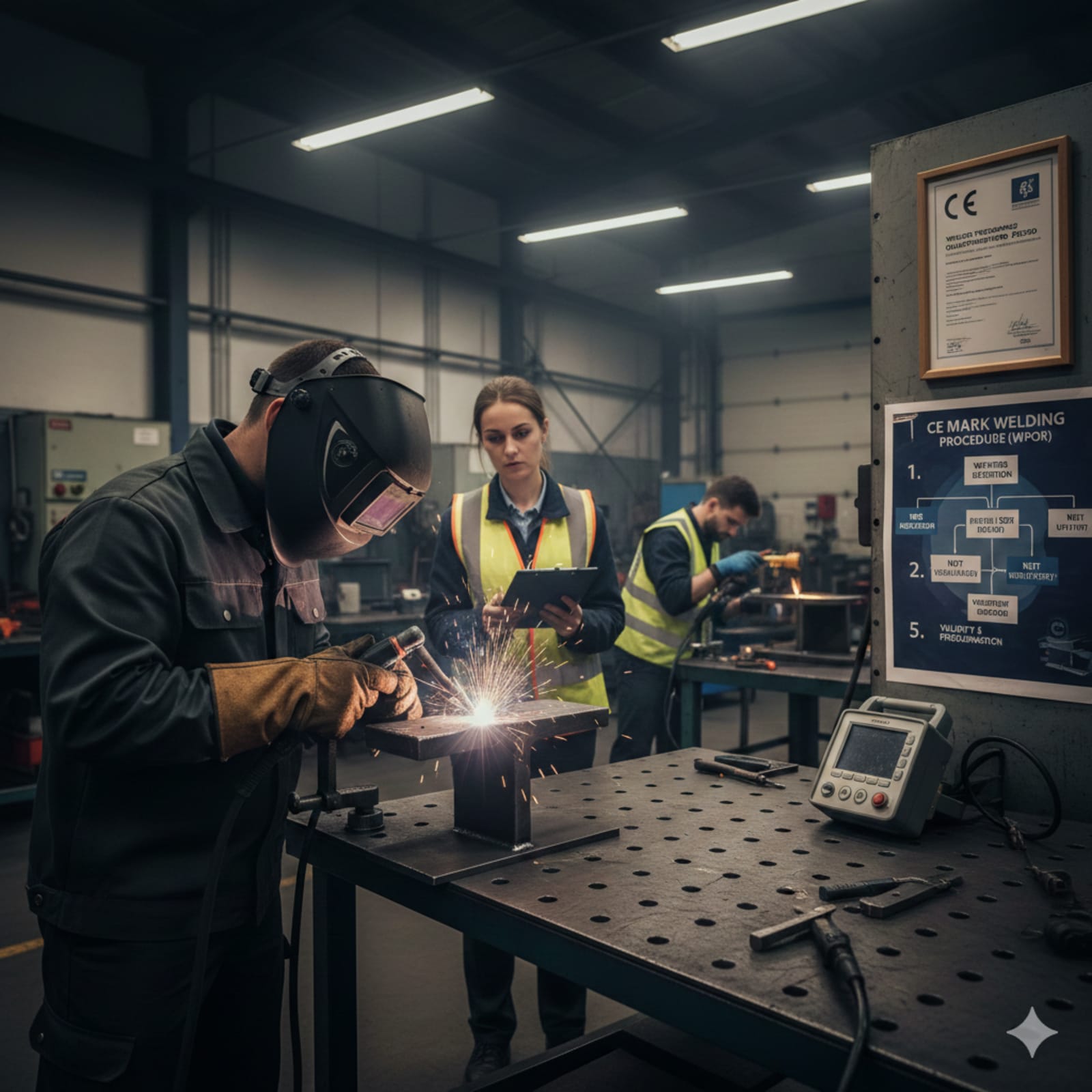
The welder is given a test coupon (piece of metal) to weld and must produce a weld meeting all specified requirements.
Weld Inspection
The completed weld is inspected for visual defects, dimensional accuracy, and penetration.
Pass or Fail
The welder receives a pass or fail based on performance. If passed, they are qualified for that material and thickness.
Our Services
Welder Qualification Services
Welder Qualification Testing
Complete welder qualification testing per EN ISO 9606 and ASME standards.
Welding Procedure Approval
Welding Procedure Specification (WPS) and Procedure Qualification Record (PQR) approval.
Welder Training
Comprehensive welder training programs for various welding processes and materials.
Welder Certification
Issue welder certificates upon successful completion of qualification tests.
Documentation Review
Review of welding documentation, procedures, and quality records.
On-site Supervision
On-site welding supervision and inspection during production welding.
Conclusion
Welder qualifications testing procedures are important for ensuring that welders have the required skills and knowledge to safely and effectively complete their welding projects. It is essential to ensure that all welders meet necessary industry standards or regulations. By following these guidelines, companies can ensure they are hiring qualified, experienced welders who deliver quality work on time.
On Behalf of Eurocert S.A
We are offering welder qualification testing and certification services on behalf of Eurocert S.A. Our team ensures compliance with all relevant international welding standards including EN ISO 9606, ASME IX, and ISO 3834.
Explore More
Related Certifications
Initiate Welder Qualification
Quick Inquiry
Our welding experts are ready to guide your organization through welder qualification testing and certification.